
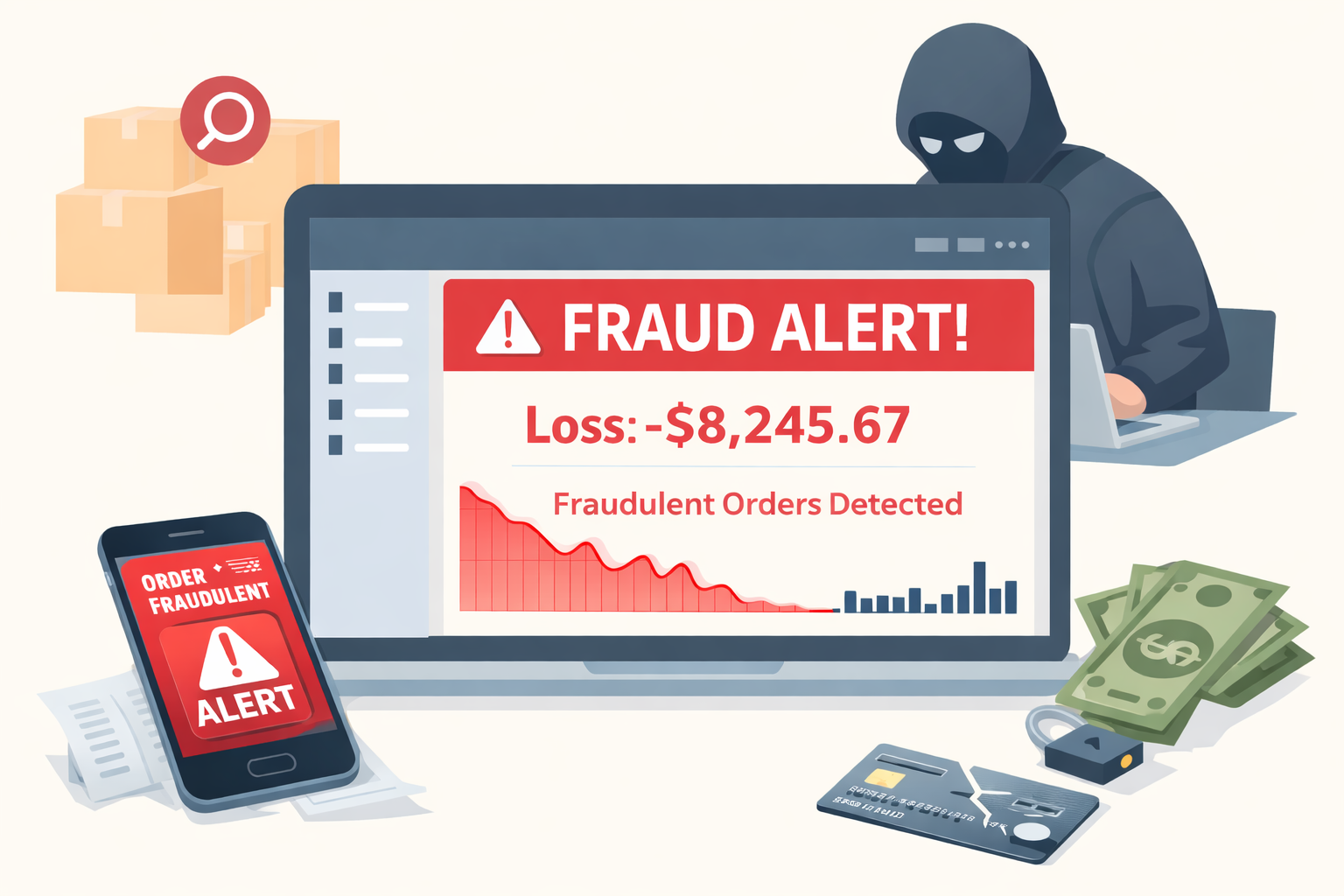
How One Online Store Lost $8,000 to Fraud — And How Automated Detection Could Have Prevented It
28th December 2024 · Written by the Keepsafe Team
Running a successful online store means managing inventory, marketing, customer service, and countless other tasks. The last thing you want to worry about is fraud. But as one store owner discovered, ignoring fraud prevention can cost you thousands in a matter of hours.
This is the story of how a small electronics retailer lost $8,000 to a coordinated fraud attack — and what you can learn from their experience.
The Attack: A Busy Friday Night
It started like any other day. Orders were coming in steadily, and the store owner was pleased to see several high-value purchases — Apple AirPods, gaming headsets, and premium electronics. The billing addresses looked legitimate, the orders were placed with different credit cards, and the platform's basic fraud analysis didn't flag anything suspicious.
By the time the owner reviewed the orders on Monday morning, eight packages had already shipped. Then the chargebacks started rolling in.
What Went Wrong: The Red Flags They Missed
When the store owner dug into the fraudulent orders, several warning signs became clear in hindsight:
- All orders came from the same IP address — Despite different billing addresses and names, every order originated from the same location.
- Shipping addresses were flagged as freight forwarders — The fraudsters used reshipper addresses that specialized in international forwarding, a common tactic to avoid detection.
- Email addresses were disposable — Tools like tempmail.com and 10minutemail.net were used to create throwaway accounts.
- Orders were placed within minutes of each other — Eight high-value orders in 20 minutes should have been a major red flag.
- The IP address had a fraud history — Databases like AbuseIPDB showed the IP had been reported for fraudulent activity multiple times.
None of these signals alone would have stopped the orders. But together? They painted a clear picture of coordinated fraud.
The Damage: More Than Just Lost Inventory
The immediate loss was significant:
- $6,400 in product value — High-margin electronics that were never recovered.
- $1,200 in chargeback fees — Eight chargebacks at $15-25 per dispute adds up quickly.
- $400+ in shipping costs — Express shipping on fraudulent orders that couldn't be recovered.
But the hidden costs were even worse:
- Days of administrative time responding to chargeback disputes (all of which were lost)
- Damage to payment processor relationship — High chargeback rates can trigger account reviews or higher processing fees
- Lost opportunity cost — Time spent dealing with fraud instead of growing the business
- Stress and anxiety — The psychological toll of being targeted and feeling vulnerable
How Automated Fraud Detection Could Have Stopped This
Here's what would have happened with an automated fraud detection system like KeepSafe in place:
Order #1 — Immediate Red Flags
The moment the first order came through, KeepSafe would have:
- Checked the IP address against fraud databases — Flagged as high-risk
- Validated the email address — Disposable email detected
- Analyzed the shipping address — Freight forwarder identified
- Generated a risk score of -85/100 (high risk)
The order would have been automatically flagged for review or held for manual approval, preventing automatic fulfillment.
Orders #2-8 — Pattern Recognition
As subsequent orders came in from the same IP address, the risk scores would have compounded:
- Multiple orders from same IP = -30 points
- Velocity check (8 orders in 20 minutes) = -25 points
- All using disposable emails = -40 points
- Final risk scores: -95 to -100/100 (critical risk)
With auto-cancel enabled for high-risk orders, all eight orders would have been automatically rejected before any inventory was committed.
The Cost of Prevention vs. The Cost of Fraud
Let's look at the math:
Cost of fraud (actual):
- Lost inventory: $6,400
- Chargeback fees: $1,200
- Shipping costs: $400
- Administrative time: ~$500 (10+ hours)
- Total: $8,500+
Cost of prevention (KeepSafe):
- Pro plan: £149/month
- API calls for these 8 orders: £included
- Total: £149/month
ROI: Preventing just one attack like this pays for 57 months of fraud protection. That's over 4.5 years.
Key Takeaways for Online Store Owners
1. Don't Rely Only on your Platform's Built-In Fraud Analysis
Platform's basic fraud detection is a good starting point, but it's not enough for sophisticated fraud attacks. It doesn't check IP reputation databases, validate disposable emails, or detect freight forwarders automatically.
2. Automated Checking Catches What Manual Review Misses
You can't manually check every order, especially during busy periods. Fraudsters know this and deliberately attack during high-volume times. Automated systems work 24/7 and never get tired.
3. Pattern Detection Is Critical
A single order might look legitimate on its own. But multiple orders from the same IP, using disposable emails, within minutes? That's a fraud pattern that only automated systems can catch in real-time.
4. Prevention Is Always Cheaper Than Recovery
Once you've shipped fraudulent orders, recovery is nearly impossible. Chargebacks are almost always decided in favor of the cardholder. The only way to protect yourself is to stop fraud before fulfillment.
5. High-Value Items Attract Fraudsters
If you sell electronics, jewelry, designer goods, or other easily-resellable items, you're a prime target. These products have high resale value and are commonly targeted by organized fraud rings.
How KeepSafe Protects Your Online Store
KeepSafe integrates directly with your online store platform to provide real-time fraud detection:
- Automatic order screening — Every order is checked against multiple fraud databases the moment it's placed
- IP reputation checking — Cross-reference with AbuseIPDB and IP quality databases to identify known fraudsters
- Email validation — Detect disposable emails, spam traps, and recently-leaked credentials
- Address verification — Flag freight forwarders, mismatched billing/shipping, and high-risk locations
- Velocity checking — Identify suspicious patterns like multiple orders from the same source
- Automated actions — Auto-tag risky orders, auto-cancel fraud, or hold for manual review
- Dashboard visibility — See fraud scores and risk factors directly in your platform's admin console
Don't Wait Until It Happens to You
The store owner in this story thought fraud "wouldn't happen to them." They were wrong. Fraud doesn't discriminate — small stores, large stores, established brands, and newcomers are all targets.
The question isn't if you'll be targeted — it's when. And when that day comes, will you be protected?
Protect Your Store Today
KeepSafe starts at just $29.99/month for up to 1,000 fraud checks. Installation takes less than 5 minutes, and you can start protecting your store immediately.
Try our free plan — No credit card required.
Start Your Free TrialCase study based on a real fraud incident. Details have been anonymized to protect the merchant's identity. Average fraud losses and recovery rates based on 2024 industry data from online merchants and payment processors.